

As cyber threats evolve and businesses ramp up defenses, cybersecurity analysts have become vital to protecting sensitive data and systems. In the U.S., demand for these professionals is growing rapidly—so if you’re looking to start or pivot into this field, here’s your roadmap to success in today’s market.
1. Know the Job Outlook
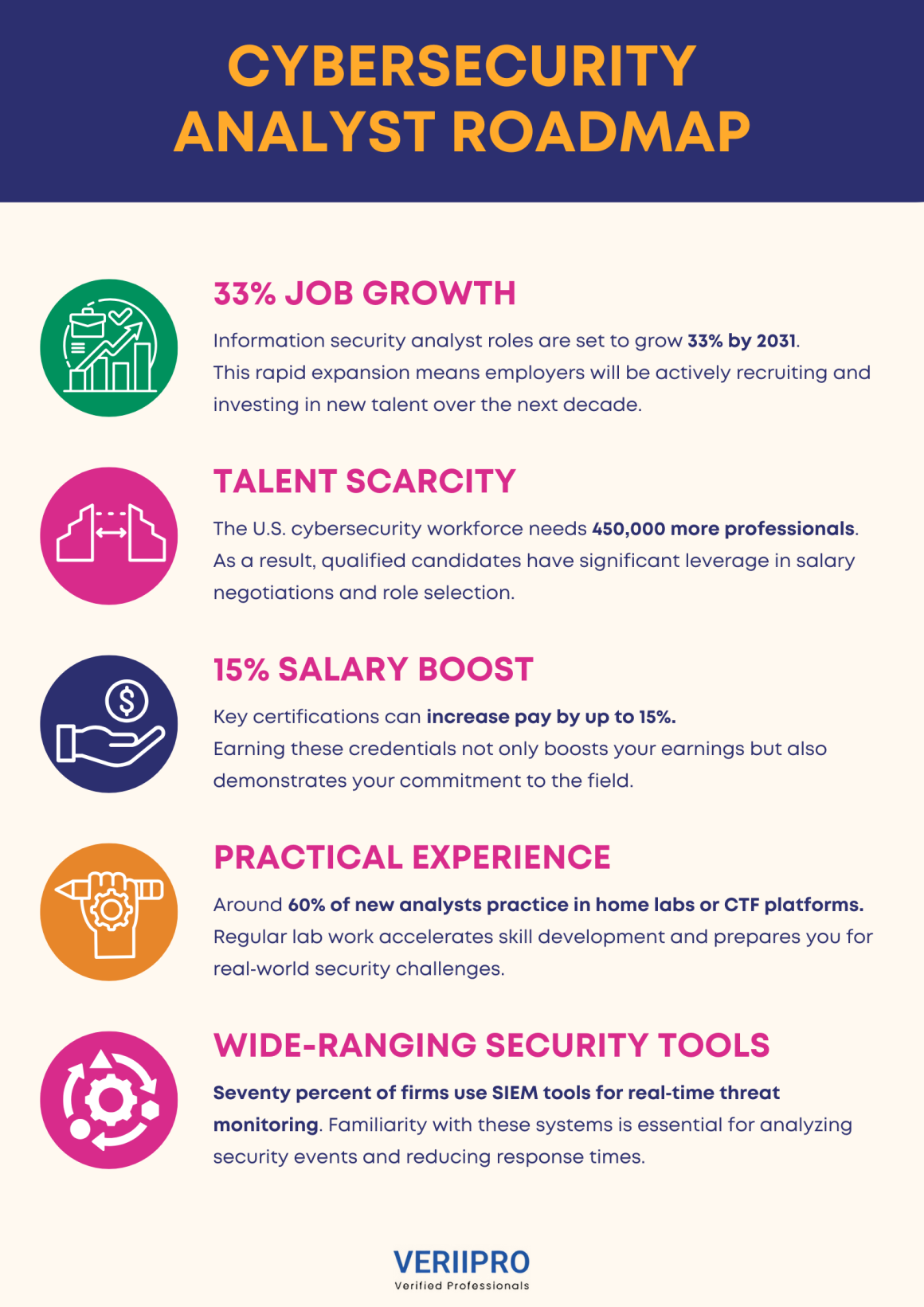
According to the Bureau of Labor Statistics, employment for information security analysts is projected to grow 33% from 2021 to 2031—more than four times the average for all occupations. At the same time, there’s an estimated 450,000‑person shortfall in the cybersecurity workforce, leaving opportunities wide open for qualified candidates.
2. Start with a Strong Educational Base
Most entry‑level cybersecurity analyst positions require at least a bachelor’s degree in computer science, information technology, or a related field. Coursework should include network security, database management, and secure coding practices. Many colleges now offer specialized cybersecurity degrees featuring hands‑on labs—seek programs that partner with security vendors to give you access to real‑world tools from day one.
3. Earn Key Certifications
Certifications accelerate your credibility and can boost salaries by up to 15%. Consider:
- CompTIA Security+ for core security knowledge
- Certified Ethical Hacker (CEH) for penetration testing skills
- GIAC Security Essentials (GSEC) to demonstrate hands‑on proficiency
Each of these credentials is widely recognized by employers and helps you stand out in a crowded job market.
4. Build Real‑World Experience
Hands‑on practice is a must. Set up a home lab using VirtualBox or VMware and run security distributions like Kali Linux. Participate in Capture The Flag (CTF) challenges on platforms such as Hack The Box to sharpen your penetration testing and forensic analysis skills. Even small freelance projects or bug bounty submissions add practical weight to your resume.
5. Master Technical and Analytical Skills
A successful cybersecurity analyst combines technical know‑how with keen analytical abilities:
- Technical: Network protocols (TCP/IP, DNS), intrusion detection systems, SIEM tools, endpoint security, and scripting (Python, PowerShell)
- Analytical: Log analysis, threat hunting, risk assessment, and incident response
Strong attention to detail and a methodical mindset will help you uncover hidden vulnerabilities and respond effectively to incidents.
6. Leverage Professional Networks
Cultivating connections can uncover unadvertised roles. Join cybersecurity groups on LinkedIn and Reddit (e.g., r/cybersecurity). Become a member of the Information Systems Security Association to access local chapter events, webinars, and mentorship programs. Networking often leads to referrals and insider knowledge about hiring trends.
7. Craft a Targeted Resume and Prepare for Interviews
Your resume should emphasize measurable achievements—such as “Reduced phishing incidents by 40% through employee training” or “Investigated and resolved 150+ security alerts per month.” Include hands‑on projects, lab work, and certifications. For interviews, practice walking through incident response scenarios and be ready to explain how you would analyze logs, identify threats, and recommend mitigations. Demonstrating both your technical process and communication skills will set you apart.
Closing Thoughts
Becoming a cybersecurity analyst in today’s market is about more than learning tools—it’s about connecting your skills to the right organizations. As you build experience and earn certifications, you’ll explore specialized tracks like threat intelligence, SOC operations, or cloud security. Keep sharpening your expertise through labs, industry events, and peer groups so you stay ahead of emerging risks. For tailored job matches and direct access to leading employers, head to VeriiPro and let us help you land the role that drives your career forward.