



Introduction
Robotics engineering is a multidisciplinary field that combines mechanical engineering, electronics, and computer science to create autonomous machines. As industries worldwide shift toward automation, the demand for experts who can design and maintain these systems is growing rapidly. It is an exciting career choice for those who want to be at the forefront of technological innovation and solve complex real-world problems. Mastering this field also puts you in a strong position for career advancement; understanding how to ask for a raise early on can help you navigate the high-value compensation tiers this industry offers.
What Is a Robotics Engineer?
A robotics engineer is a professional responsible for the conceptualization, design, testing, and building of robotic systems. Their role involves developing software to control robotic movements, designing the physical structures of machines, and ensuring that all components work together seamlessly. This role requires a high level of responsibility, as these engineers often oversee the entire lifecycle of a robotic project from initial blueprints to final deployment. Successfully managing these complex duties provides a solid foundation for asking for a raise based on your technical contributions to the company’s bottom line.
Why Choose a Career in Robotics Engineering?
The opportunities in this field are vast, ranging from developing life-saving surgical robots to creating autonomous drones for space exploration. With a high salary potential and a strong job growth outlook, it offers long-term financial stability. As robotics continues to impact every sector, engineers in this field remain at the center of future tech developments. Knowing how to ask for a raise at work is particularly useful here, as the rapid evolution of the industry often means your skills become significantly more valuable within just a few years of experience.
Also Read: Advancements in Robotics and Automation: Revolutionizing Industries and Workplaces
Educational Requirements for Robotics Engineering
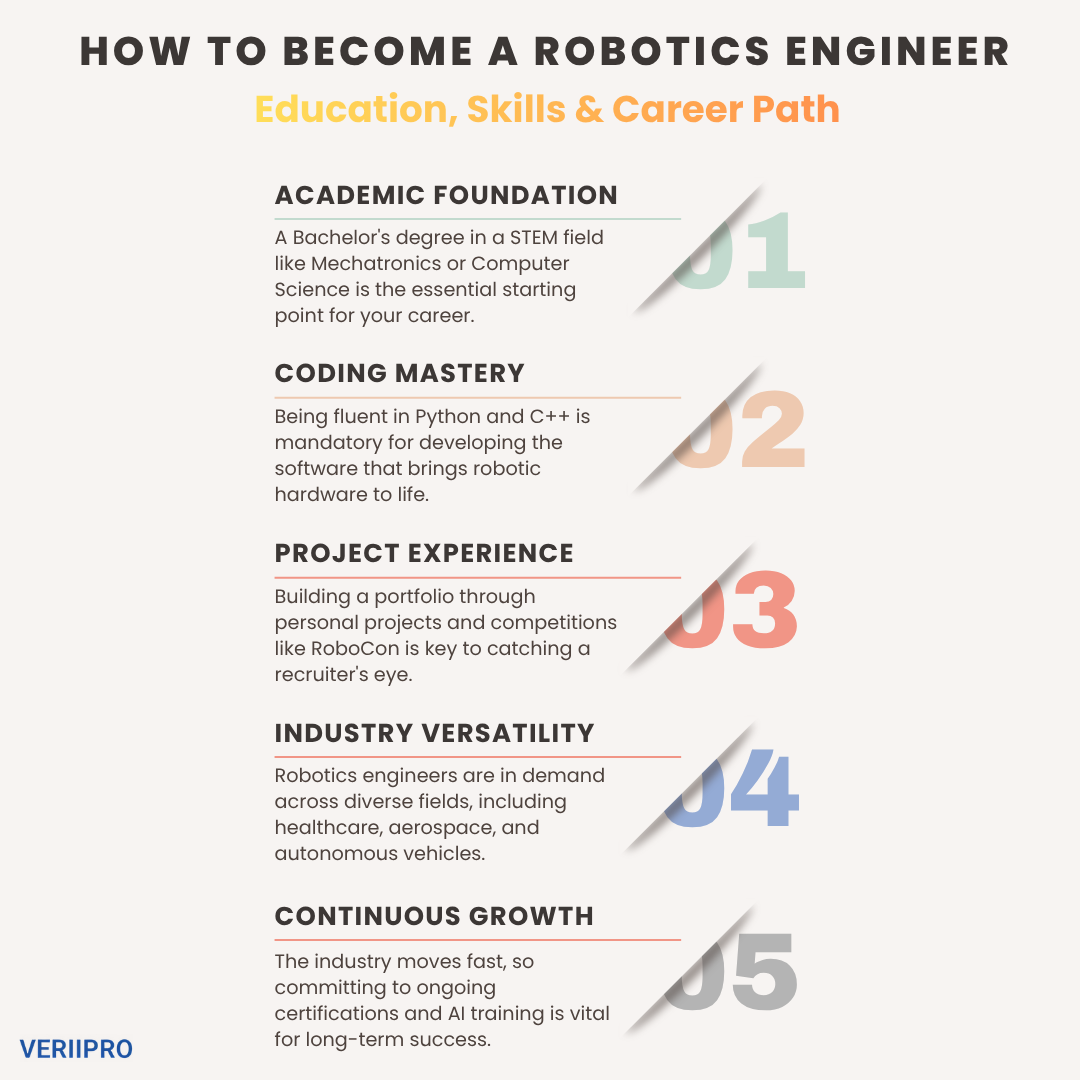
Formal education is a critical pillar for any aspiring robotics engineer. Most professionals begin with a solid academic background before moving into specialized roles.
- Bachelor’s degree: A degree in Mechanical Engineering, Robotics, Mechatronics, or Computer Science is typically required.
- Master’s degree: Specialization options through a Master’s or Ph.D. can help you reach high-level research positions.
- STEM coursework: Success depends on a deep understanding of Math, Physics, and Programming.
When you complete these programs, you’ll be ready to enter the market. Learning how to request a salary increase during your first contract negotiation can ensure you are fairly compensated for your academic rigor.
Essential Skills and Knowledge Areas
To succeed, you must develop a diverse set of technical and cognitive skills:
- Mechanical design and dynamics: Building the physical skeleton of the robot.
- Electronics and circuits: Creating the “nervous system” that powers the machine.
- Computer programming: Proficiency in Python and C/C++ for software development.
- Control systems and automation: Designing the feedback loops that guide movement.
- Artificial intelligence and machine learning: Implementing “smart” features and autonomous decision-making.
- Problem-solving and critical thinking: Navigating the complex failures that occur during testing.
Strong proficiency in these areas makes you a prime candidate for a salary increase request as you take on more complex projects.
Robotics Engineering Career Path Steps
Moving from a student to a working professional involves a clear, step-by-step progression.
- Step 1: Choose the Right Degree Program: Focus on ABET-accredited engineering schools.
- Step 2: Gain Hands-on Experience and Projects: Build small-scale robots at home or in university clubs.
- Step 3: Learn Robotics Tools and Software: Master ROS (Robot Operating System) and CAD software.
- Step 4: Complete Internships or Co-ops: Gain exposure to industrial environments.
- Step 5: Build a Robotics Portfolio: Showcase your best work to potential employers.
By following these steps, you build the leverage needed for how to negotiate a raise effectively in your future roles.
Also Read: What Is Professional Development? Benefits, Goals & Action Plan
Robotics Internships and Practical Experience
Practical experience is often what separates a good candidate from a great one. Employers look for a demonstrated ability to work with physical hardware and complex code.
- Intern at robotics labs: Work alongside seasoned researchers to see how high-level tech is developed.
- Participate in competitions: Join events like RoboCon or FIRST Robotics to test your skills under pressure.
- Build personal projects: Use Arduino or Raspberry Pi to create unique machines.
- Open-source communities: Contribute to collective projects to learn best practices from the global community.
This experience is essential for proving your value when you eventually look into how to ask for a pay raise.
Certifications and Additional Training
Beyond your degree, specific certifications can help you stand out in a competitive market:
- Robotics-related certifications: Industry-specific credentials from organizations like ARM.
- Online courses: Specialized modules from Coursera, Udemy, or edX.
- AI micro-credentials: Targeted training in neural networks and automation.
- Technical certifications: Specialized training in CNC, PLC, or embedded systems.
Jobs and Career Opportunities for Robotics Engineers
The versatility of this degree allows you to work in numerous booming sectors:
- Manufacturing and automation: Industrial arms and assembly line systems.
- Healthcare robotics: Surgical assistance and patient care devices.
- Aerospace robotics: Mars rovers and autonomous satellite systems.
- Autonomous vehicles: Developing self-driving technology for cars and trucks.
- Research & development: Creating next-generation materials and algorithms.
- Robotics software engineering: Writing the high-level code that manages robot fleets.
Salary and Job Outlook
The financial prospects for this career are excellent, with demand far outstripping supply.
- Entry-level vs experienced: Entry-level salaries are high, but experienced engineers can double their earnings through specialization.
- Regional differences: While US salaries are often higher in raw numbers, the booming tech sector in India offers significant growth opportunities.
- Industry demand: Sectors like logistics and e-commerce are hiring aggressively.
Tips for Landing Your First Robotics Engineer Job
Getting your foot in the door requires a strategic approach to your robotics engineer job search:
- Tailor your resume: Highlight the specific robotics projects you’ve completed.
- Focus on experience: Emphasize any hands-on work from internships or co-ops.
- Network: Connect with professionals at conferences or on LinkedIn.
- Technical interviews: Be prepared to solve coding problems and explain mechanical concepts on the fly.
- Showcase your portfolio: Link your GitHub or personal website directly in your application.
Common Challenges in Robotics Engineering
The path is not without its hurdles. Prospective engineers should be prepared for:
- Complex learning curve: Mastering several disciplines at once is mentally taxing.
- Rapid changes: Technology evolves so quickly that today’s cutting-edge tool could be yesterday’s news tomorrow.
- Continuous updates: You must be committed to constant skill updates to stay relevant.