



How to Ask for a Raise: A Step-by-Step Guide to Salary Negotiation
Introduction
Asking for a raise is often cited as one of the most stressful professional milestones, yet it is a fundamental part of career management. Salary negotiation is not just about the immediate paycheck; it is about ensuring your compensation accurately reflects your evolving expertise and the value you bring to your organization. This guide provides a clear, actionable roadmap to help you navigate the process with confidence and professionalism.
Why Asking for a Raise Matters
Advocating for your worth is essential for long-term financial advancement and career growth. Regular negotiations ensure your contributions are formally recognized and prevent your earning potential from stagnating. According to research by the Pew Research Center, proactive communication regarding compensation is a key driver in closing wage gaps and securing a trajectory that matches your professional achievements.
When Is the Right Time to Ask for a Raise?
Identifying the right window for your request is just as important as the request itself. You want to ensure the company is in a stable position and your recent successes are top of mind for your manager.
- Performance review cycles: Utilize scheduled company evaluations to discuss compensation.
- Company financial health: Ensure the business is performing well before requesting additional resources.
- After major achievements: Negotiate immediately after delivering a high-impact project.
- Fiscal year planning: Make your request before new department budgets are finalized.
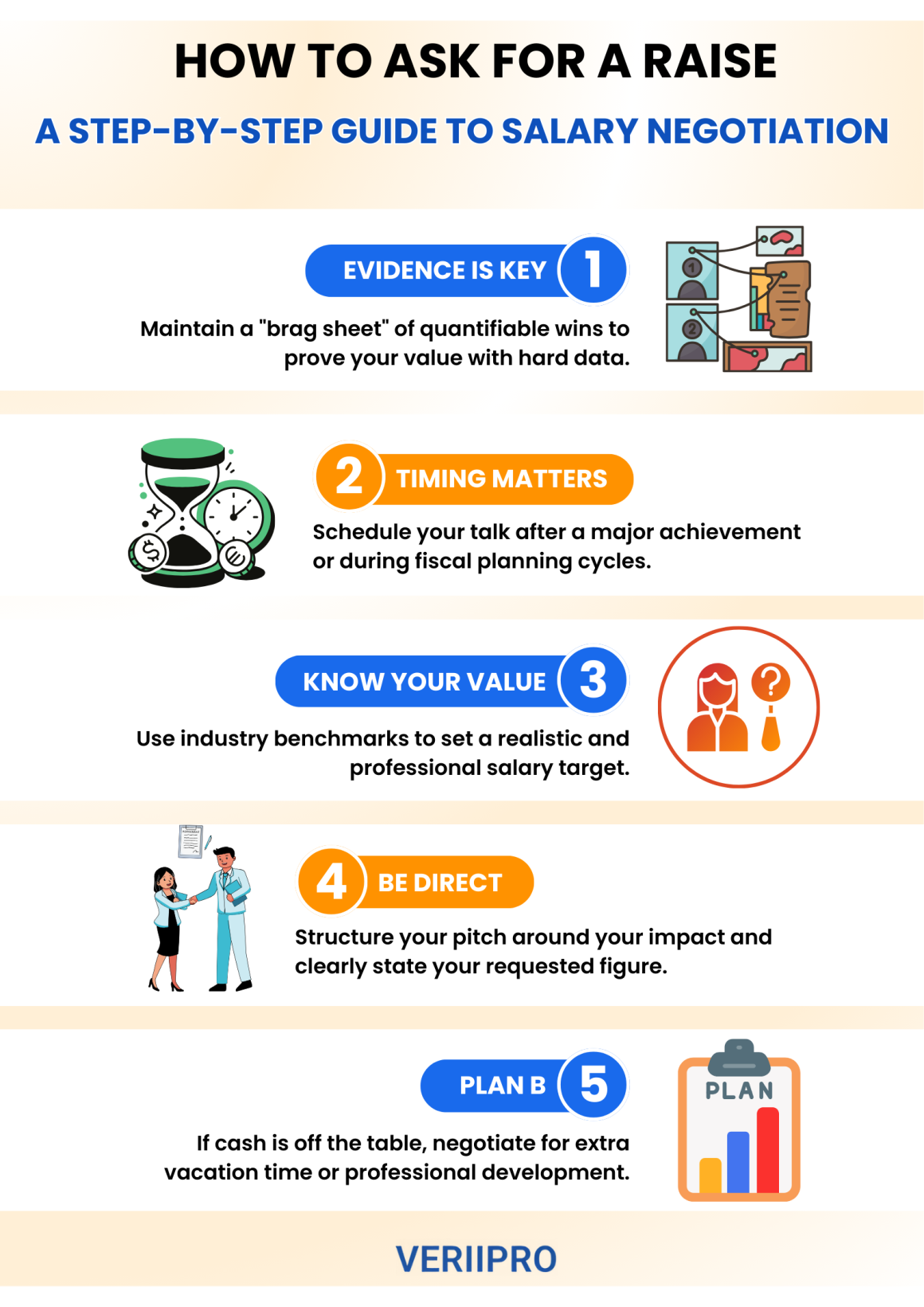
Step 1: Evaluate Your Performance and Contributions
Before meeting with your manager, you must build a compelling case based on evidence. Preparing a summary of your impact helps your leadership justify the increase to their superiors.
- Quantifiable achievements: List specific metrics, like a percentage increase in sales or efficiency.
- Added responsibilities: Highlight tasks you have taken on that exceed your original job description.
- Revenue or cost-saving impact: Demonstrate how your work benefited the company’s bottom line.
- Positive feedback: Include praise from clients, stakeholders, or other internal departments.
Step 2: Research Salary Benchmarks
Knowing your market value provides a factual baseline for your request. It shifts the conversation from a personal favor to a professional market adjustment based on current industry standards.
- Industry salary averages: Research what competitors pay for your specific role.
- Geographic salary differences: Account for cost-of-living variations in different cities.
- Experience level comparison: Ensure you are benchmarking against peers with similar expertise.
- Salary research tools: Use credible platforms like Glassdoor or Payscale.
Step 3: Decide How Much to Ask For
Set a realistic target based on your research and your specific contributions over the past year. Having a clear number shows you have done your due diligence.
- Typical raise percentage (3–5%): This is the standard for annual cost-of-living adjustments.
- Promotion-based increases: Expect a higher range if your title or authority is changing.
- Performance-based adjustments: Aim for the higher end of the market if you are consistently over-delivering.
Step 4: Schedule the Conversation Professionally
A raise request should never be a surprise or a casual comment in passing. Setting a formal meeting ensures you have your manager’s full attention and respect.
- Email request: Send a clear, professional note requesting a meeting to discuss your role.
- Performance review discussion: Mention in advance that you would like to discuss compensation.
- Calendar scheduling: Block out dedicated time so neither party feels rushed.
Step 5: Prepare What to Say (Raise Strategy)
Structure your pitch to highlight your value and your future with the company. A calm, data-driven approach is always the most effective.
- Start with appreciation: Briefly mention how much you enjoy contributing to the team.
- Present accomplishments: Walk through your evidence of high performance.
- Share market research: Cite the benchmarks you found during your research phase.
- Clearly state salary request: Be direct and specific about the figure you are seeking.
Step 6: Handle Your Manager’s Response
Be prepared for various outcomes and maintain your professional composure regardless of the immediate answer.
- If approved: Confirm the details in writing and express your gratitude.
- If delayed: Ask for a specific date to revisit the conversation.
- If denied: Respectfully ask what milestones you need to hit to qualify in the future.
- Negotiation follow-up: Keep the door open for future discussions by remaining a top performer.
Common Mistakes to Avoid
- Poor timing: Asking during a company crisis or a period of budget cuts.
- Lack of preparation: Not having data or examples to back up your request.
- Emotional reasoning: Basing your request on personal financial needs rather than merit.
- Comparing yourself to coworkers: Focus on your own value, not the paychecks of others.
- Being vague about numbers: Not having a specific target figure or range in mind.
Alternatives If a Raise Isn’t Possible
If the budget is truly frozen, you can still improve your total compensation through other creative avenues.
- Performance bonuses: One-time payments tied to specific, measurable goals.
- Flexible work arrangements: Remote work options or modified schedules.
- Additional benefits: Increased 401(k) matching or more vacation time.
- Professional development funding: Company-paid certifications or specialized training.
After the Conversation: Follow-Up and Next Steps
The way you handle the post-meeting phase reinforces your professionalism and ensures that both parties are aligned on the outcome.
- Send a thank-you email: Briefly thank your manager for their time and the discussion.
- Confirm action items: Summarize any agreed-upon changes, goals, or figures.
- Set a timeline for future review: Ensure there is a formal plan to check in again.
Frequently Asked Questions (FAQs)
How much of a raise should I ask for?
A 3% to 5% increase is standard for cost-of-living. If you have taken on significant new duties or are underpaid relative to the market, a request of 10% to 15% is often appropriate.
Can I ask for a raise outside of a performance review?
Yes. If you have recently hit a major milestone or your role has fundamentally changed, you do not need to wait for the annual review cycle to discuss compensation.
What if my raise request is denied?
Ask for a “growth roadmap.” Identify the specific skills, certifications, or targets your manager needs to see to approve an increase at a later date.
Should I mention a competing job offer when asking for a raise?
Only if you are genuinely prepared to leave. Using another offer as leverage can sometimes damage your long-term relationship with your current employer if they feel you are no longer committed.
What if my manager says there is no budget for raises?
Ask when the budget will be re-evaluated. In the meantime, suggest non-monetary perks like extra PTO, remote work flexibility, or professional development stipends.
Can I negotiate benefits instead of salary?
Absolutely. Things like home office stipends, tuition reimbursement, or extra vacation days are often managed under different budget pools and may be easier for managers to approve.
How often can you ask for a raise?
Generally, once per year is the professional standard. Asking more frequently may be perceived as unprofessional unless your core responsibilities have undergone a drastic shift.