


Green IT: The Rise of Digital Sustainability
When most of us think about climate change, we picture exhaust-spewing cars, factory smokestacks, or plastic floating in the ocean. We rarely think about sending an email, streaming a show on Netflix, or training a machine learning model. In our collective imagination, the digital world is clean, invisible, and weightless. We store our lives in “the cloud,” a term that suggests nothing more than fluffy, harmless water vapor floating in the sky.
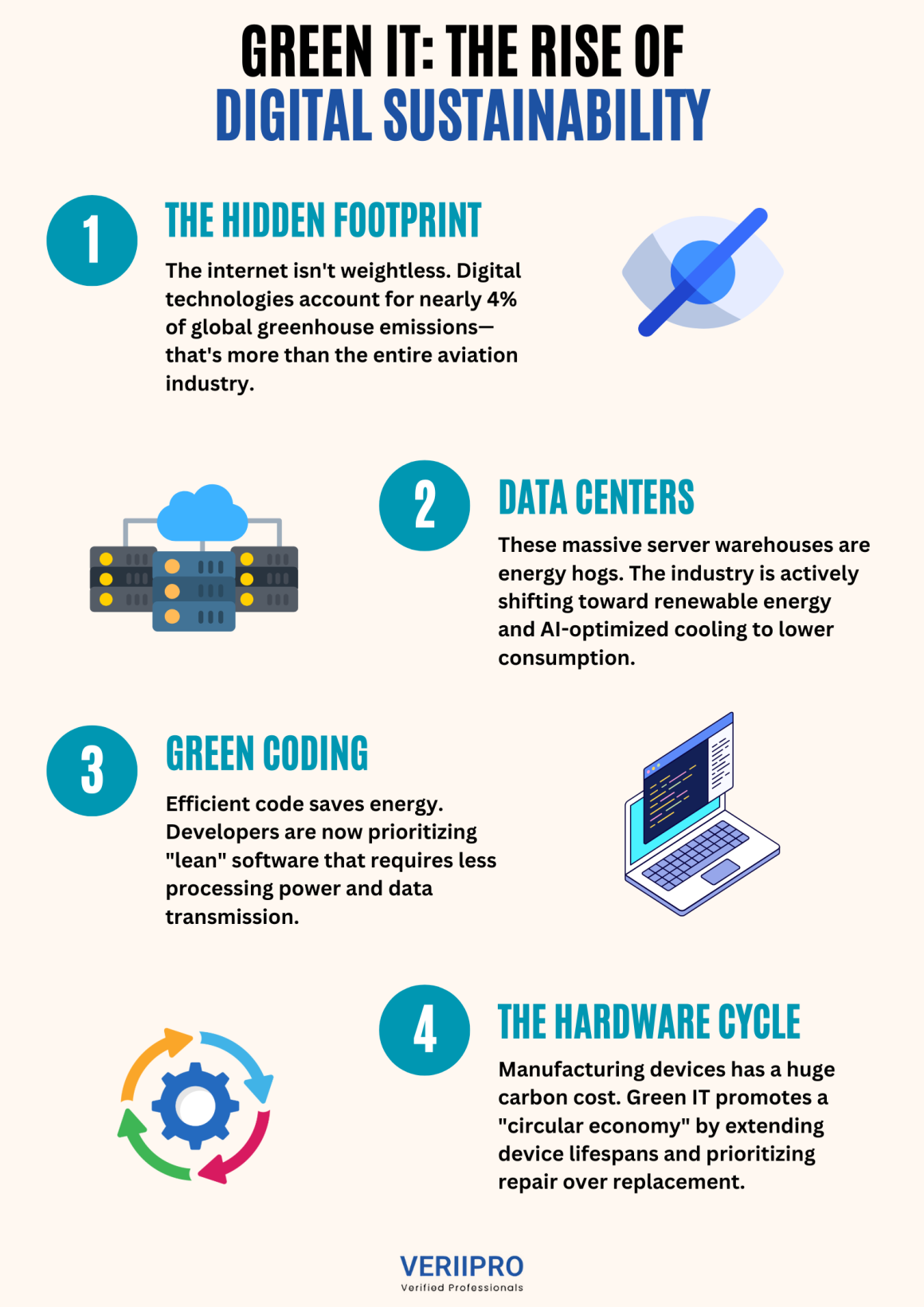
But the reality is much heavier. The internet is arguably the largest machine humanity has ever built, and it runs on a staggering amount of electricity. According to research by The Shift Project, digital technologies are responsible for nearly 4% of global greenhouse gas emissions. To put that in perspective, that’s actually more than the civil aviation industry. If the internet were a country, it would be the fourth-largest polluter in the world.
This realization has sparked a quiet revolution in the tech sector. It’s called Green IT (or Digital Sustainability), and it’s rapidly moving from a niche concern to a core business requirement. For engineers, developers, and IT leaders, sustainability is becoming the new efficiency.
The Invisible Factory: Data Centers
The heart of the problem lies in data centers. These are the massive, windowless warehouses packed with thousands of servers that power everything from your bank account to your TikTok feed. They generate an immense amount of heat, requiring industrial-grade cooling systems just to keep the hardware from melting down.
Historically, the only goal for these facilities was uptime: keep the servers running at all costs. But that mindset is shifting. As reported by the International Energy Agency (IEA), data centers consume about 1-1.5% of global electricity use, a number that is projected to spike as AI adoption grows.
In response, tech giants are rethinking the very architecture of the internet. We’re seeing a shift toward “hyperscale” data centers located in cooler climates (to save on air conditioning) and powered entirely by renewable energy. Companies like Google and Microsoft are even experimenting with underwater data centers or using AI to optimize cooling efficiency, shaving off precious percentage points of energy waste.
The Rise of “Green Coding”
For software developers, Green IT introduces a fascinating new challenge: Green Coding.
For decades, Moore’s Law (the idea that computer power doubles every two years) made us a bit lazy. Developers didn’t need to worry about writing efficient code because hardware kept getting faster and cheaper. We built “bloated” software that consumes far more processing power and therefore electricity than necessary.
Green coding flips the script. It focuses on writing software that is energy-efficient by design. This means optimizing algorithms to run faster, reducing the amount of data transmitted over networks, and removing “dead code” that runs in the background for no reason. The Green Software Foundation, a consortium of tech leaders, is now establishing standards to measure the “carbon intensity” of software. In the near future, a “good” developer won’t just write code that works; they will write code that sips power instead of guzzling it.
The Hardware Problem: Closing the Loop
Software and energy are only half the battle. The physical devices we hold in our hands, laptops, smartphones, and tablets, represent a massive environmental cost. A significant portion of a device’s total carbon footprint comes from its manufacturing process before it’s even turned on.
The culture of “planned obsolescence,” where we upgrade our phones every two years, is ecologically disastrous. This has led to a global e-waste crisis. The World Health Organization (WHO) estimates that the world generates over 50 million metric tons of e-waste annually, much of which contains toxic materials.
Green IT advocates for a “circular economy” in hardware. This involves designing devices that are easier to repair (think of the “Right to Repair” movement), extending the lifespan of corporate laptops, and rigorously recycling old components. IT departments are rethinking their procurement strategies, opting for modular devices and refurbished equipment rather than automatically buying the newest shiny toy.
Why Business Cares (It’s Not Just Charity)
You might be thinking, “This sounds nice, but companies only care about profit.” That is exactly why Green IT is winning. Sustainability and profitability are finally aligning.
- Cost Reduction: Energy is expensive. Optimizing code and consolidating servers lowers the electricity bill. Extending the life of hardware reduces capital expenditure.
- Regulatory Pressure: Governments, particularly in the EU and the U.S., are implementing stricter ESG (Environmental, Social, and Governance) reporting requirements. Companies now have to disclose their carbon footprint, including their digital supply chain.
- Talent Attraction: A Deloitte survey finds that Gen Z and Millennial workers prioritize environmental sustainability when choosing an employer. To hire the best tech talent, companies need to show they care about the planet.
Green IT is no longer just a “nice-to-have” PR initiative. It is a fundamental shift in how we build, deploy, and consume technology. It turns out that building a better digital future means building a greener one, too.
Closing Thoughts
Looking for opportunities in Green Tech and Sustainability? VeriiPro is here to help! The intersection of technology and environmental impact is creating a wave of new roles, from Green Software Engineers to ESG Data Analysts. VeriiPro specializes in connecting forward-thinking professionals with companies dedicated to building a sustainable future. With our resources and network, we can help you find a role where your technical skills contribute to a healthier planet.